Real Patient Stories and Keratoconus Help
Hearing from real patients can help you feel less alone. Watch how people with vision concerns found guidance, clarity, and next steps.
Straightforward guidance for Southern California patients who want to understand keratoconus symptoms, glasses, contact lenses, crosslinking, surgery, specialist care, and treatment options.
Helpful education. Real treatment guidance.
Beverly Hills and Westlake Village specialist support.

Know the signs and what to watch for.
Explore all treatment options and paths.
Glasses options for better daily vision.
Soft, hybrid, and specialty contacts.
Strengthen the cornea and slow progression.
Surgical options explained simply.
Explore verified Southern California clinic locations.
Options for advanced and complex cases.
Hearing from real patients can help you feel less alone. Watch how people with vision concerns found guidance, clarity, and next steps.
Keratoconus is a condition where the cornea gradually becomes thinner and more cone-shaped, which can cause blurry vision, glare, halos, changing glasses prescriptions, and difficulty with night driving.
Learn more about keratoconus →Many patients ask if keratoconus can be cured. The answer depends on the stage of the condition. Keratoconus is usually managed, stabilized, and treated with the right plan, but no page should promise a guaranteed cure.
Learn the honest answer →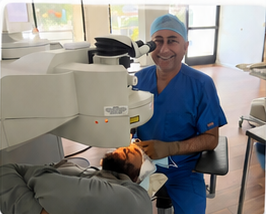
Dr. Rajesh Khanna, MD helps patients understand modern keratoconus options including crosslinking, CTAK, specialty lenses, advanced keratoconus care, and second opinions.
Meet the Keratoconus SpecialistHelpful patient education should be simple, clear, and trustworthy. This section highlights keratoconus education resources connected with Dr. Rajesh Khanna, MD.

Connect with experienced keratoconus doctors and specialists who understand your vision needs.
9100 Wilshire Blvd, Suite 265E,
Beverly Hills, CA 90212,
United States
Phone: +1 310-482-1240
31824 Village Center Rd F,
Westlake Village, CA 91361,
United States
Phone: +1 805-230-2126
Choose a real clinic location for corneal assessment and a discussion of appropriate care. We do not publish an unverified doctor directory.
Common signs include blurry or distorted vision, glare, halos, ghosting, frequent prescription changes, and difficulty with night driving.
Keratoconus is usually managed and stabilized. The right plan depends on the stage, vision quality, corneal thickness, and scan results.
Treatments may include glasses, specialty contact lenses, corneal crosslinking, CTAK, and advanced surgical options.
Glasses may help in early or mild cases, but many patients later need specialty contact lenses for better visual clarity.
Contact lenses may be recommended when glasses no longer give clear or stable vision because of corneal irregularity.
Crosslinking is a procedure used to strengthen the cornea and help slow or stop keratoconus progression.
Surgery is considered when vision cannot be managed with glasses or lenses, or when corneal shape and thickness require advanced care.
You can start with a cornea specialist, keratoconus specialist, or eye doctor experienced with specialty contact lenses and corneal scans.
Yes. Bring any previous corneal topography, tomography, contact lens and prescription records to your visit. Call the office first if you need to share records securely.
 Keratoconus Topography